

2026 At A Glance
Chess access can mean a lot of different things.
For one student, it might be discovering the game at an after-school program a few blocks from home. For another, it might be playing in their first tournament, spending a week at summer camp, joining our All-Girls community, or reaching the point where they are ready to compete nationally.
Over the last year, we’ve focused less on simply being in more places and more on building stronger pathways for young people to find chess, stay connected to it, and decide how far they want to go.
Building deeper roots in Chicago neighborhoods
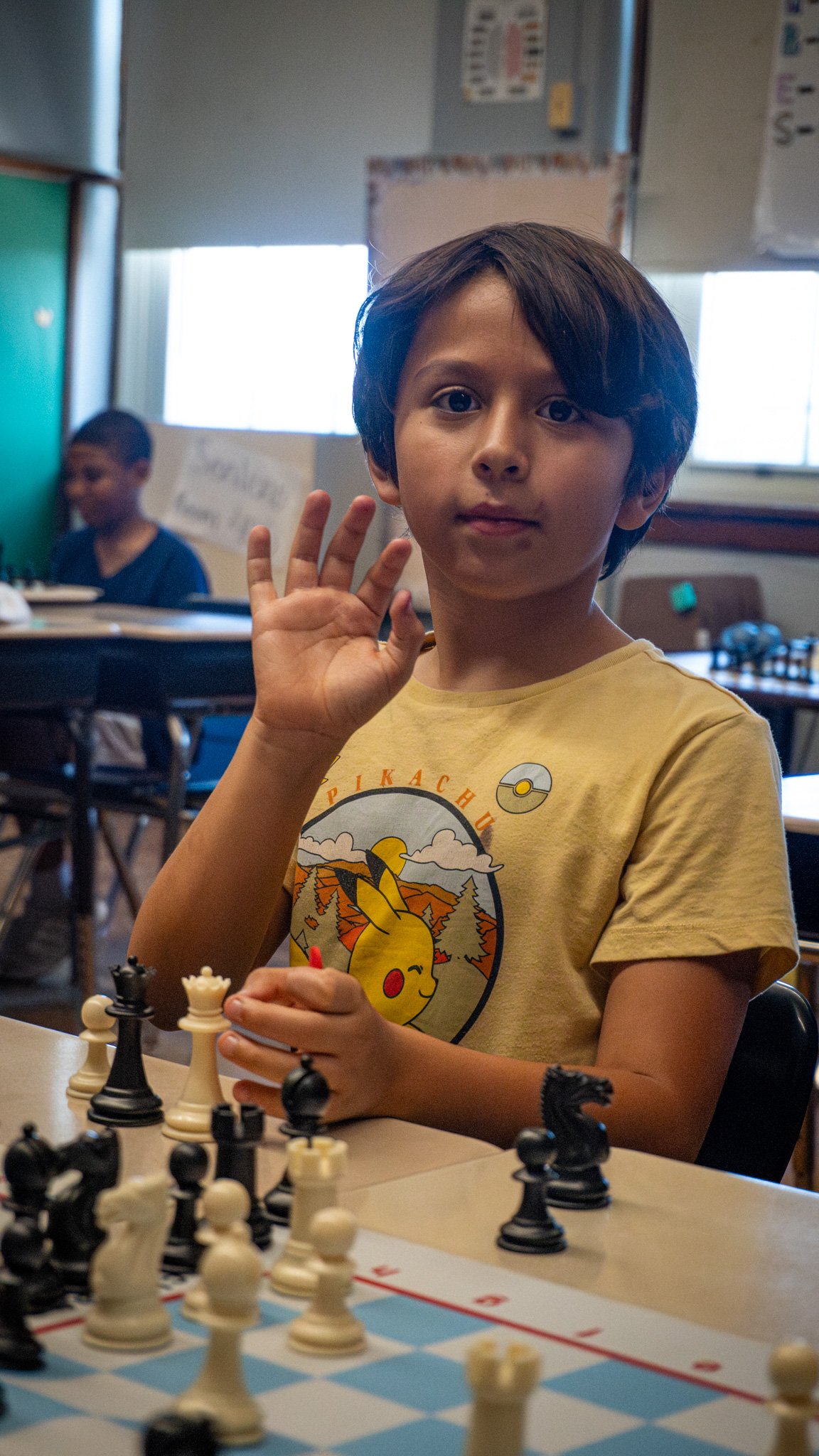
For years, one of the easiest ways for us to describe growth was by counting the number of schools we served.
We have started thinking about that differently.
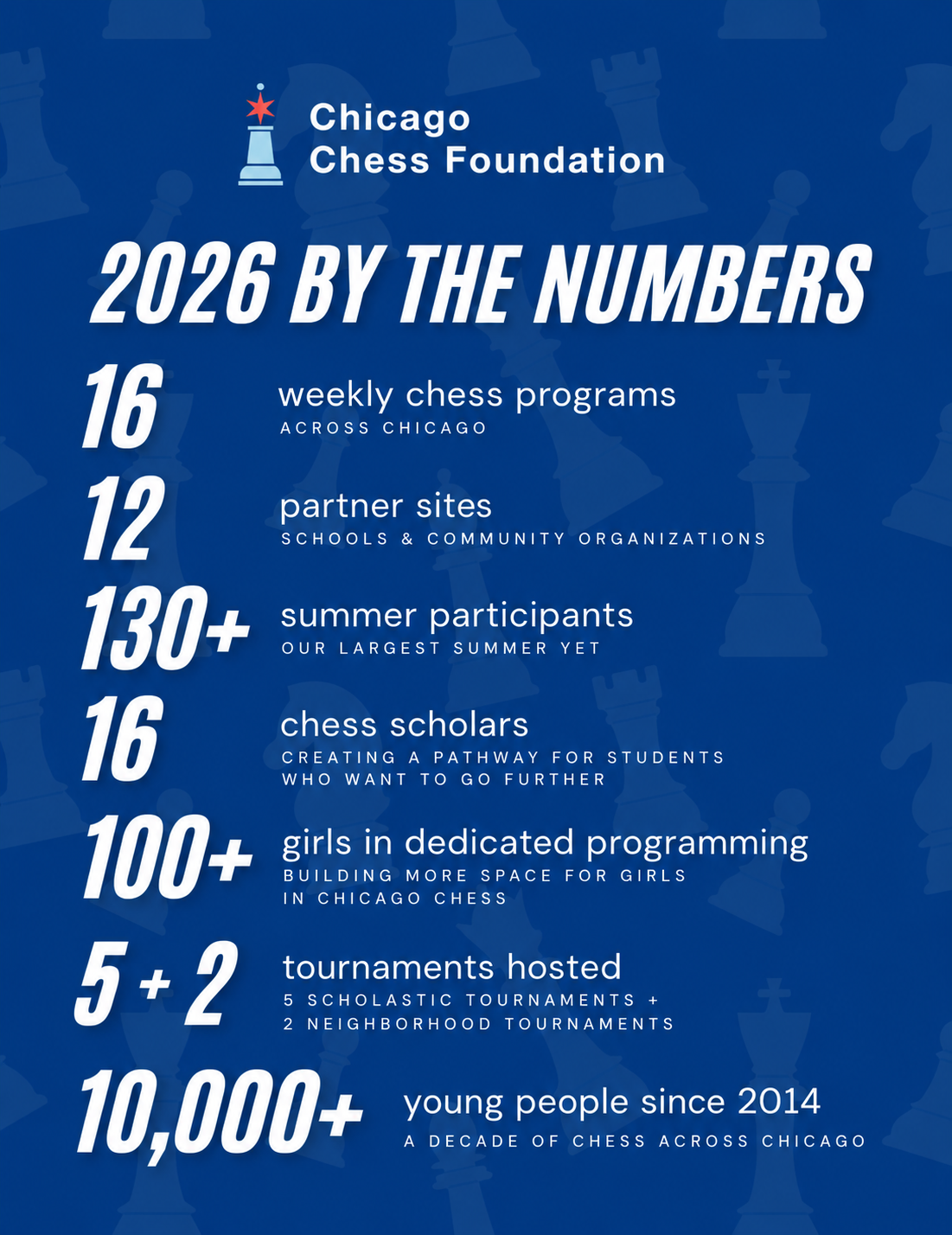
Today, CCF operates 16 weekly programs across 12 school and community partner sites, with a growing emphasis on building clusters of programming within neighborhoods. Our hub model allows us to know families better, work more closely with community partners, connect students to nearby opportunities, and create something that can become part of a neighborhood rather than simply another after-school activity.
The goal is not to put a chess club everywhere. It is to build places where chess can actually take root.
More ways to find your place in chess
In 2026, more than 130 young people participated in our summer programming, our largest summer season yet. We hosted five scholastic tournaments and two neighborhood tournaments, creating opportunities for students to compete both citywide and closer to home.
Our Chess Scholars program grew to 16 students, giving young players who want to pursue the game more seriously a pathway to advanced instruction, experiences outside the classroom, and higher levels of competition.
We also reached more than 100 girls through CCF programming, while continuing to build dedicated All-Girls instruction, social events, and competitive opportunities. And our work continues to expand our idea of accessibility, including new programming designed alongside Chicago's visually impaired community.
The programs look different because the young people we serve are different. We think that is the point.
Across schools, communities, and generations
Since 2014, more than 10,000 young people across Chicago have learned, played, or competed through Chicago Chess Foundation programs. The current page already carries that cumulative figure, and I think it is still worth keeping because it gives the newer annual numbers some historical weight.
But after more than a decade of doing this work, our definition of impact has gotten more complicated.
A student attending chess club matters. So does whether there is another program nearby when they want to play more. Whether they feel comfortable entering their first tournament. Whether they can find a coach who knows them. Whether girls can look around a chess room and see other girls. Whether a student who becomes serious about the game has somewhere to go next.
10,000+ Youth Participating in our programs
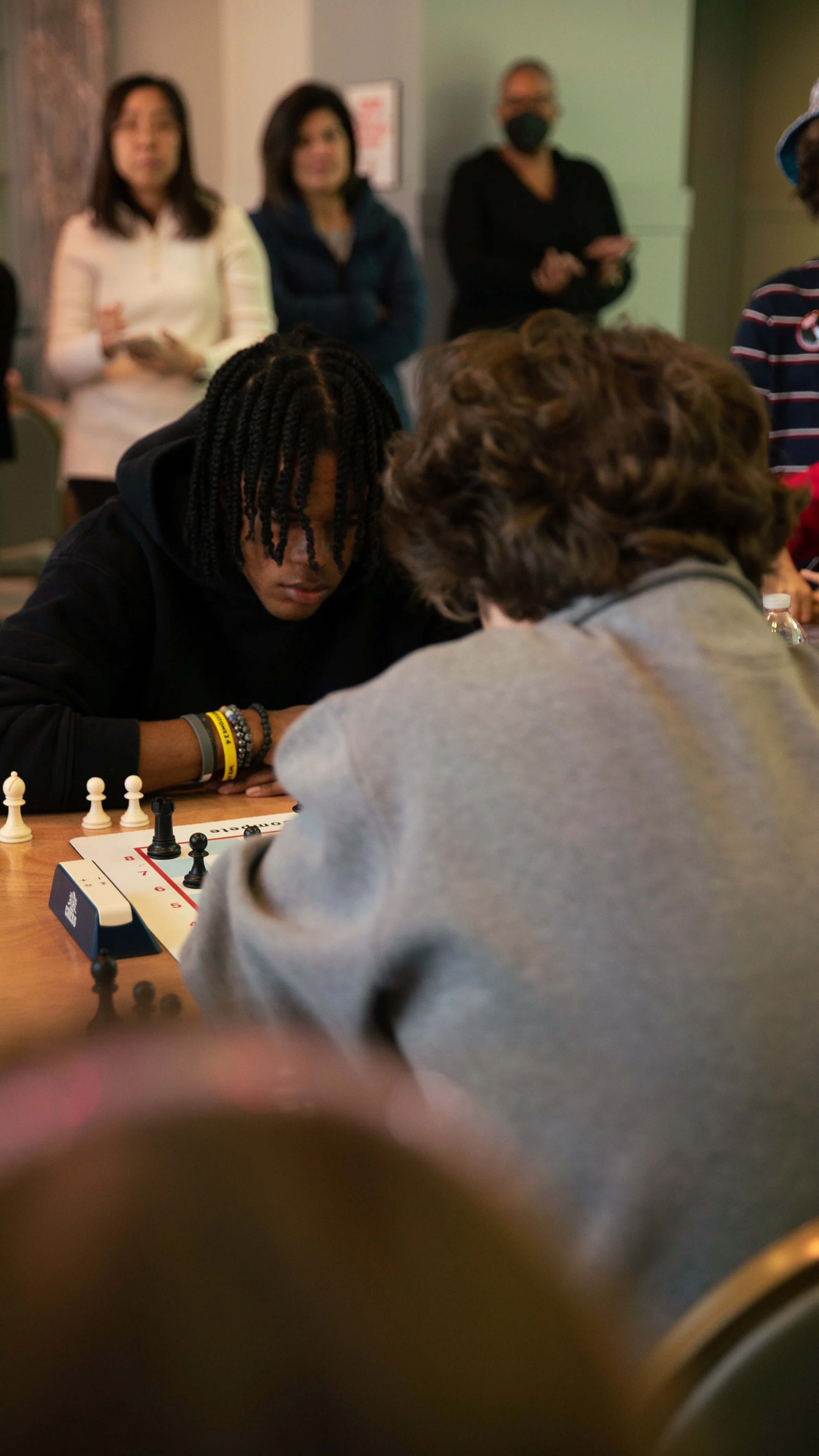
It takes neighborhood partners. Coaches who know their communities. Free tournaments. Summer programs. Spaces designed specifically for girls. Opportunities for advanced players. Adaptations for students who experience the game differently. And, most importantly, a willingness to keep asking whether the programs we've built are actually serving the young people we say they're for.
We want every young person in Chicago who finds something in chess to have somewhere to go with it.