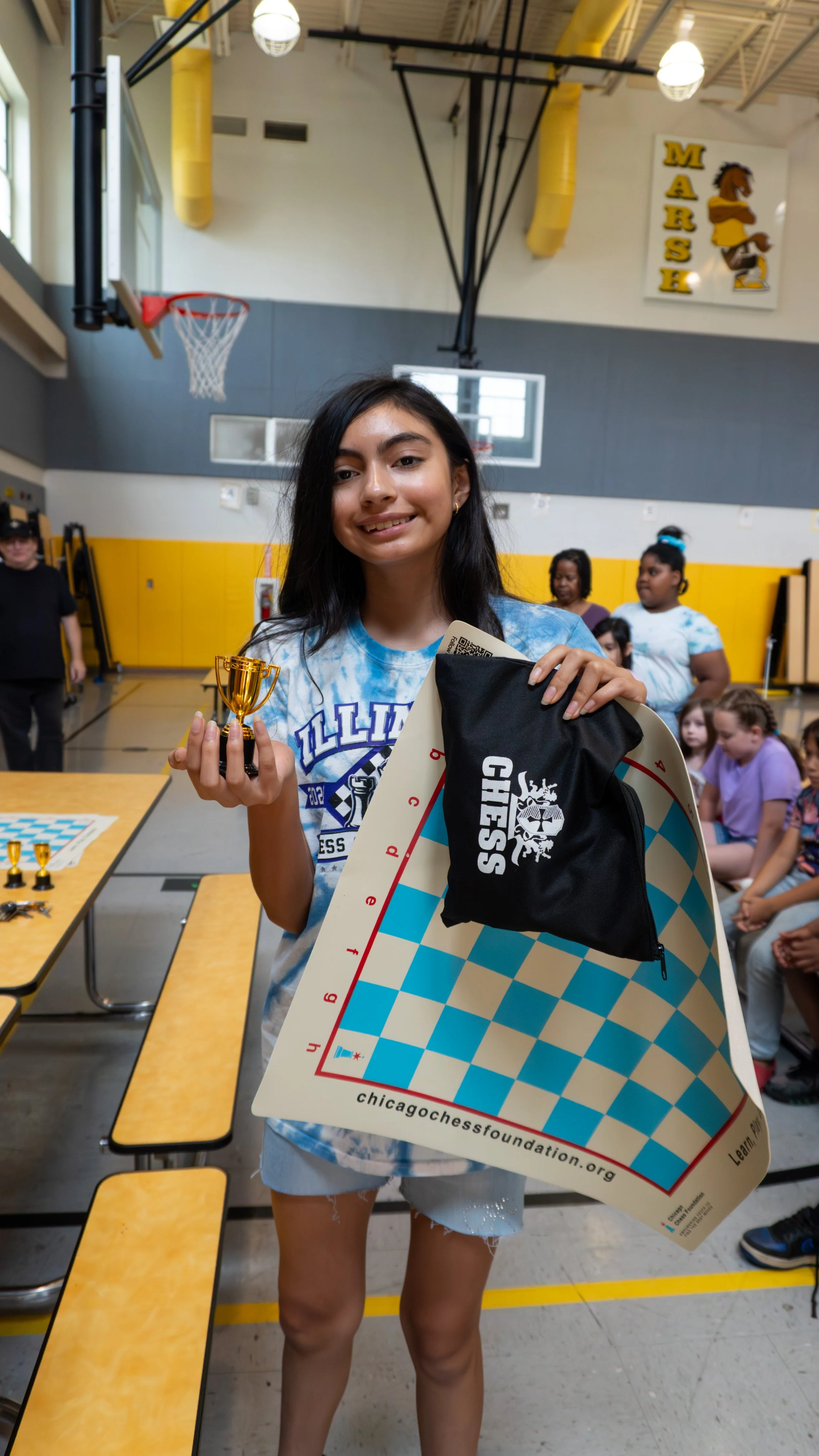
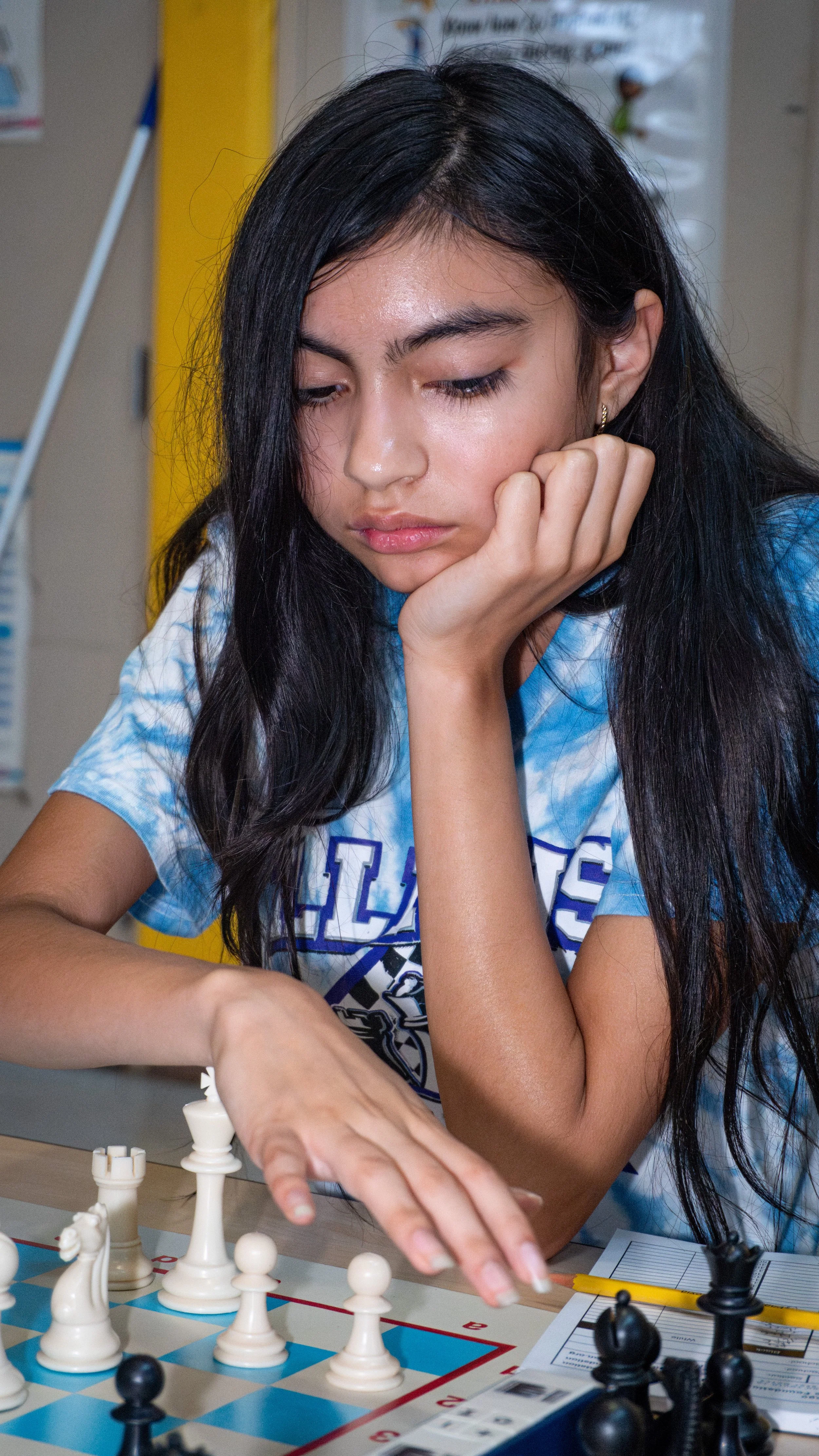
I’ve spent a few weeks thinking about a draw Mia Campuzano offered at a chess tournament. I ran the game through an engine and found the moment she could have played for a win. It took me a little longer to think about why she might have been happy with a draw.
A few weeks ago, some of us from the Chicago Chess Foundation volunteered with Coach Garza at a CPS tournament at Mather High School. Mia is the top player on Coach Garza’s team and CCF’s Player of the Year. She went into the third round 2–0. When she came out of the tournament room, she was smiling. Her mom looked more serious.
“Darryl, I need you to talk to Mia,” she said. “This happens where she’ll make friends with a girl before the round starts and instead of playing the game out she’ll offer them a draw.”
I met Mia on my first day running a CCF program at summer camp last summer. In a casual game, you can tell when Mia has found something before she even touches a piece. Her whole face changes. Then the jokes start. There’s a little window between the moment she sees the move and the moment she plays it, and she seems to enjoy that window as much as anything that happens on the board.
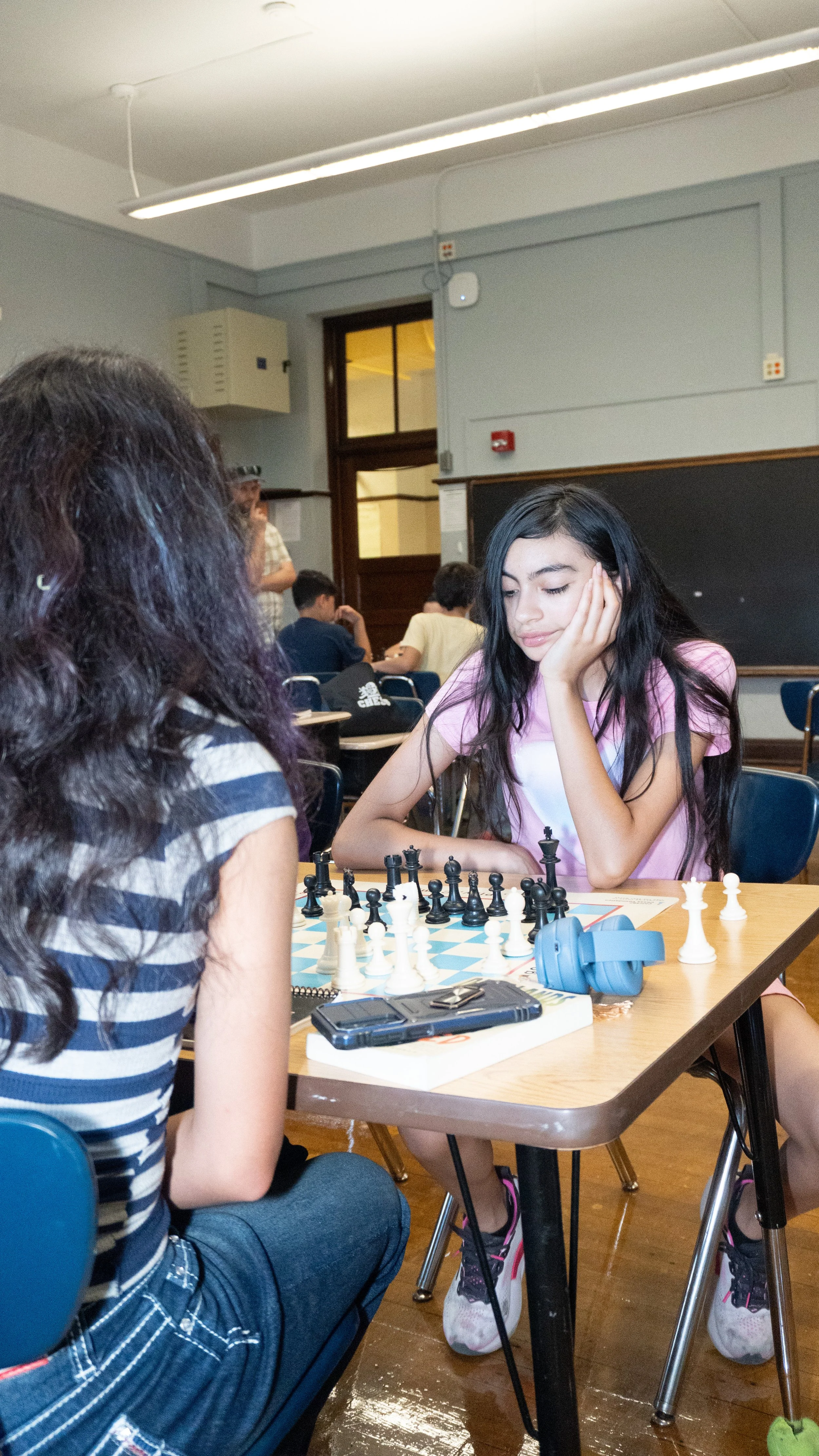
Her mom was the only parent that day who asked me what else there was for Mia to do once camp ended. Since then, I’ve taught Mia in full classrooms and worked with her in private lessons. Her rating has gone from about 700 to 1100. I’d seen how seriously she took getting better, which probably had something to do with how quickly I took her mom’s side at Mather.
I told Mia that winning the round mattered. It mattered for her own record, and it mattered for a team that had a shot at a trophy. Then I took her notation sheet and ran the game through an engine, figuring I’d find the moment she could have pressed for a win.
I found it. It was the move she played right before she offered the draw.
There’s something funny about asking a computer to tell you what happened between two kids. It gave me exactly what I asked for. Mia had earned a winning position. There was a straightforward lesson available to me as her coach about how to turn that position into a full point. I’d already given her most of it before I’d even looked at the game.
I sat with that for a moment, then went back and apologized for scolding her. She still had chess to play that day. I know how easy it is for a kid to carry the feeling that they’ve disappointed an adult into the next round. Whatever I wanted Mia to learn from that game, I’d made it harder for her to hear.
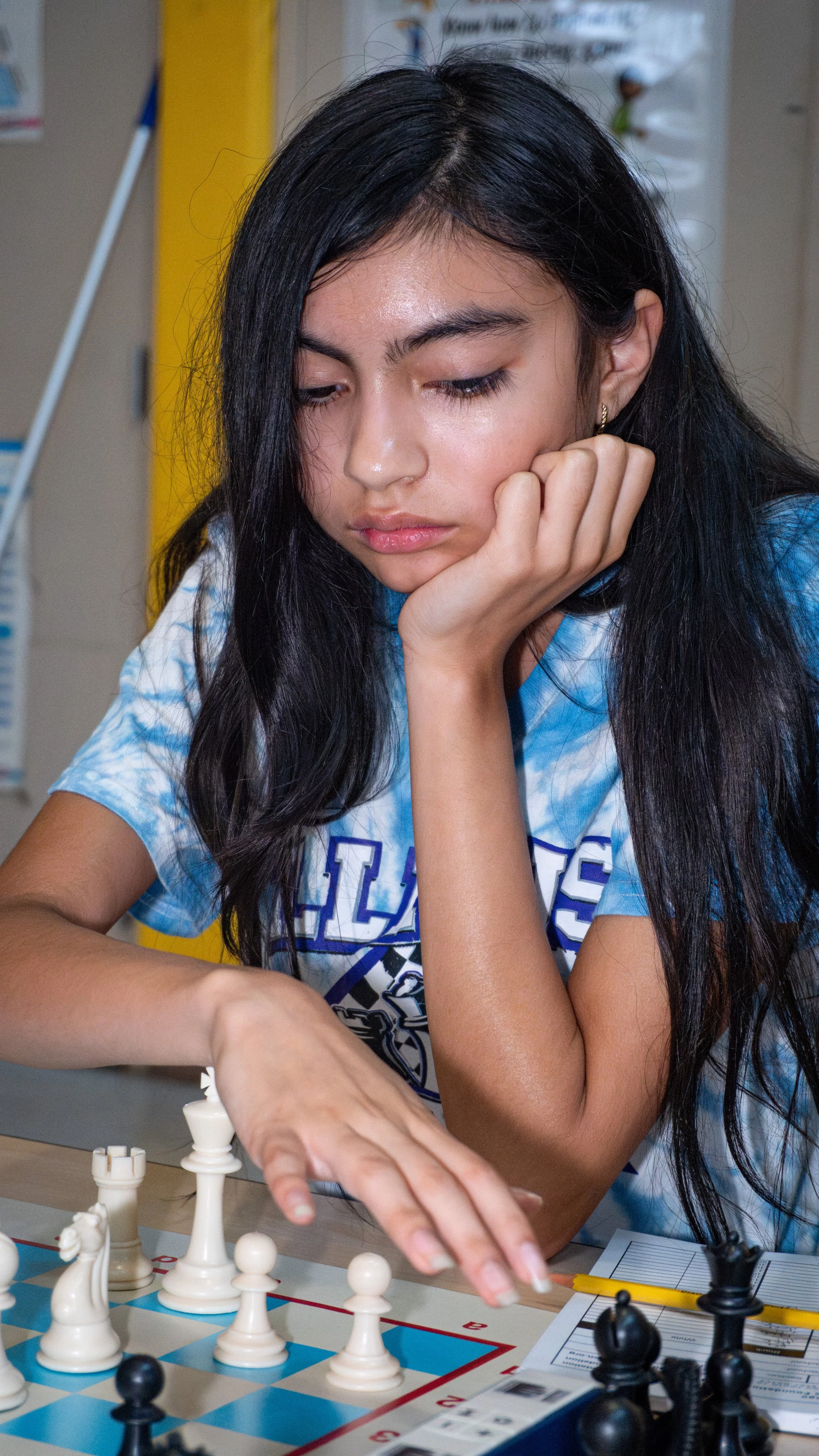
I kept telling this story to friends and family over the next few weeks. I think what stayed with me was the part her mom mentioned almost in passing. Mia had made a friend before the round started. By the time she sat down at the board, something had already happened that mattered to her. By the time I saw her, I was thinking about a team trophy. We were both having a perfectly reasonable Saturday.
At CCF, we want every student in Chicago to have access to chess for free. I think a lot about what we’re giving kids access to when we say that. Mia leaves summer camp with more friends. At after-school sessions, she gets to spend time with the friends she already has. On a Saturday at Mather, she can walk into a room full of kids from other schools and find somebody she wants to know. Getting good at chess has given her more reasons to walk into those rooms. Making friends has given her more reasons to come back.
I’d still like to go over that game with Mia. I’d like to hear what she saw when she played that last move. And somewhere down the line, when she’s forgotten what move she played in the third round at Mather, I hope she runs into that girl at another tournament and remembers her name.