
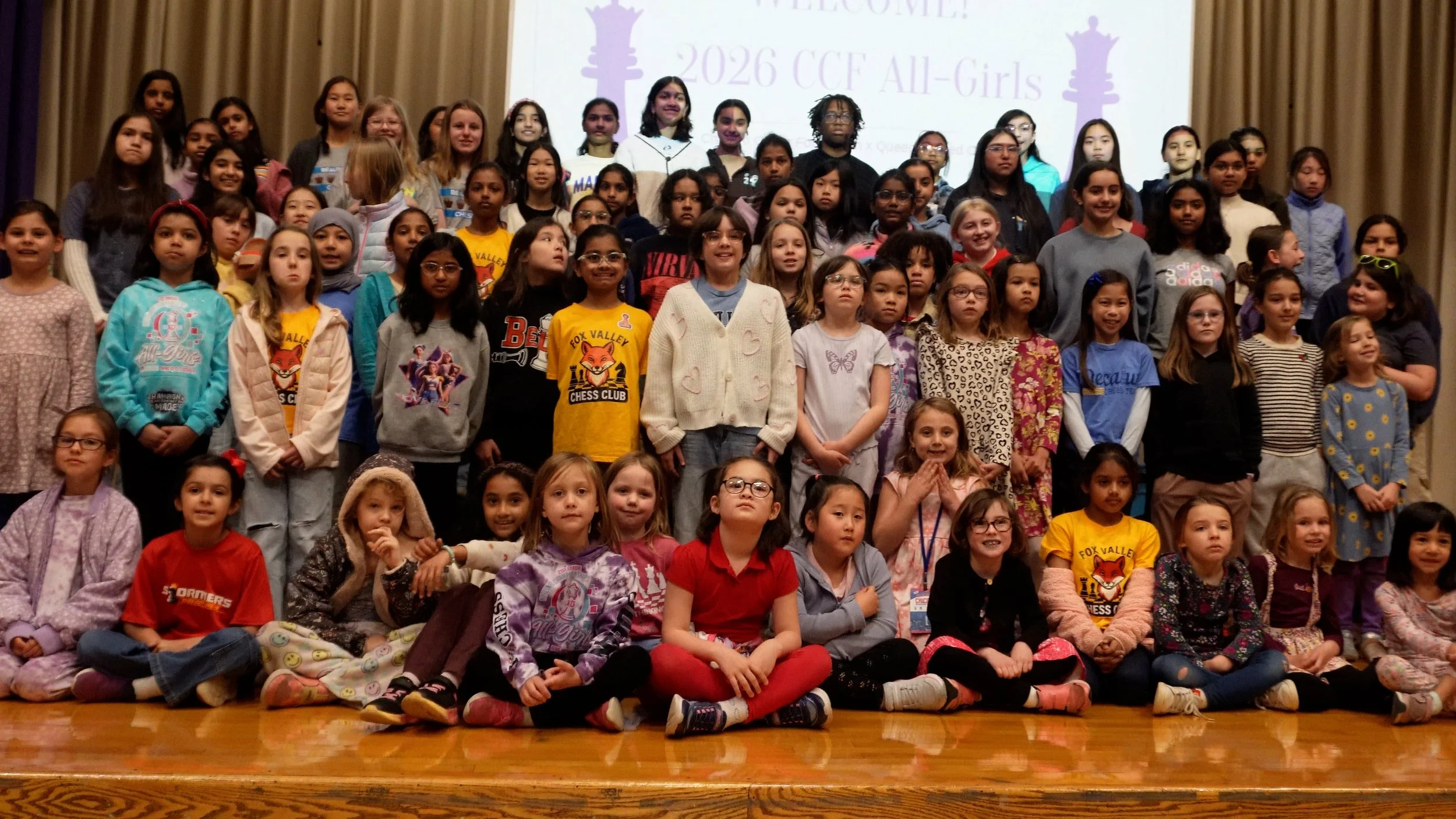
What is Access?
For a long time, when we talked about access at Chicago Chess Foundation, we were primarily talking about geography and income.
Could a student attend a chess program if their school couldn’t afford one? Could a child in a Title I school get the same opportunities as a child whose family could pay for private lessons, tournament fees, and chess camps?
Those questions still matter. They will always be part of our work.
But we have started asking a bigger question:
Who is still missing from the chess community, even when the program is free?
That question has changed the way I think about access.
Access isn’t just about whether someone can afford to play chess. It is also about whether they can see themselves in the room once they get there.
It is why we are investing more intentionally in girls and women in chess.
It is why we are building programming with Blind Services Chicago and thinking more seriously about what chess opportunities can look like for visually impaired players.
It is why our neighborhood hub model is built around communities instead of expecting families to travel across the city to find us.
And it is why we want the people teaching, organizing, and leading chess to reflect the young people we serve.
Our goal is becoming much simpler:
We want chess to be played by everyone, in every community in Chicago.
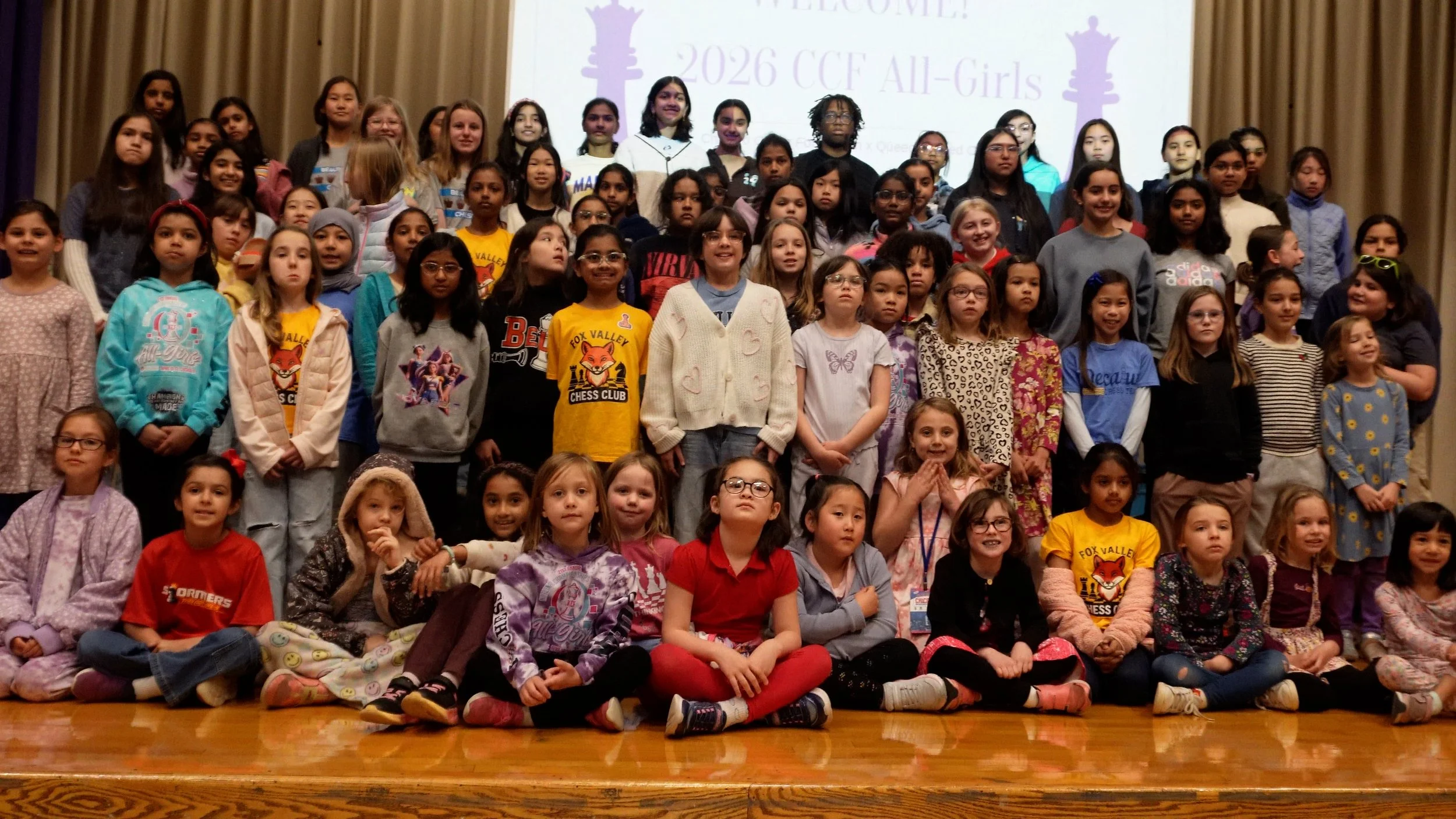
Girls don't need a separate version of chess
One area where I think the chess community still has a lot of work to do is how we talk about girls.
Too often, girls in chess are treated as a special category before they are treated as chess players.
We celebrate the best girl in a tournament.
We create a separate girls award.
We talk about increasing female participation.
Those things can be valuable. Representation matters, and creating spaces specifically for girls can help more young players enter the game and stay with it.
But we also have to make sure we are recognizing girls for how good they actually are.
Mecca Rawlins and Mia Campuzano are two of the top 10 scholastic chess players in the city of Chicago.
Not two of the top girls.
Two of the top scholastic chess players.
Period.
That distinction matters.
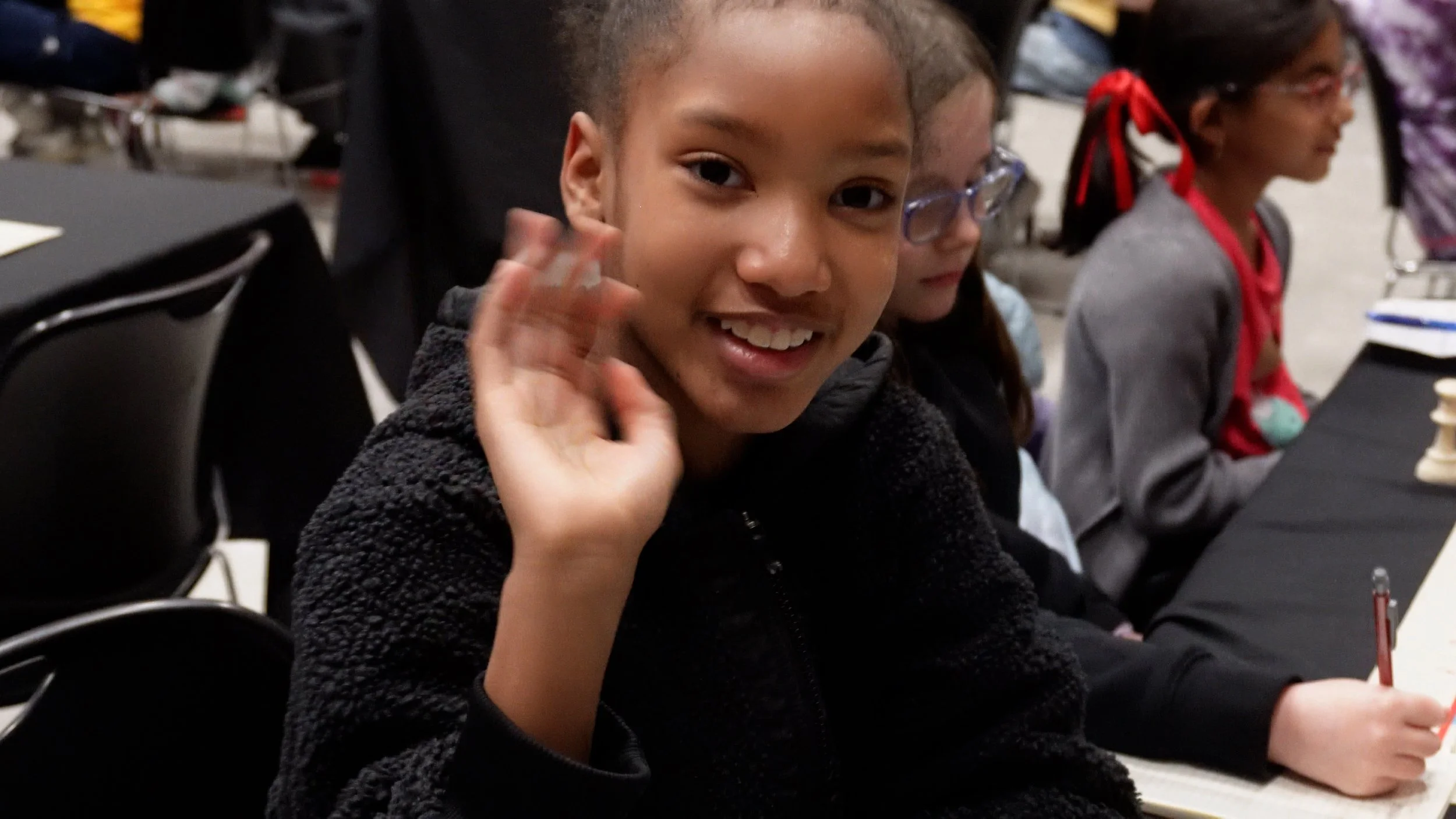
Players like Mecca and Mia deserve to be highlighted alongside the best players in the city because that is where they belong. Younger girls should be able to look at Chicago chess and see girls winning games, competing on top boards, teaching other players, and being recognized as some of the strongest players in the room.
That visibility creates its own kind of access.
If we want more girls to play chess, we cannot only tell them that chess is open to them. We have to show them what is already possible.
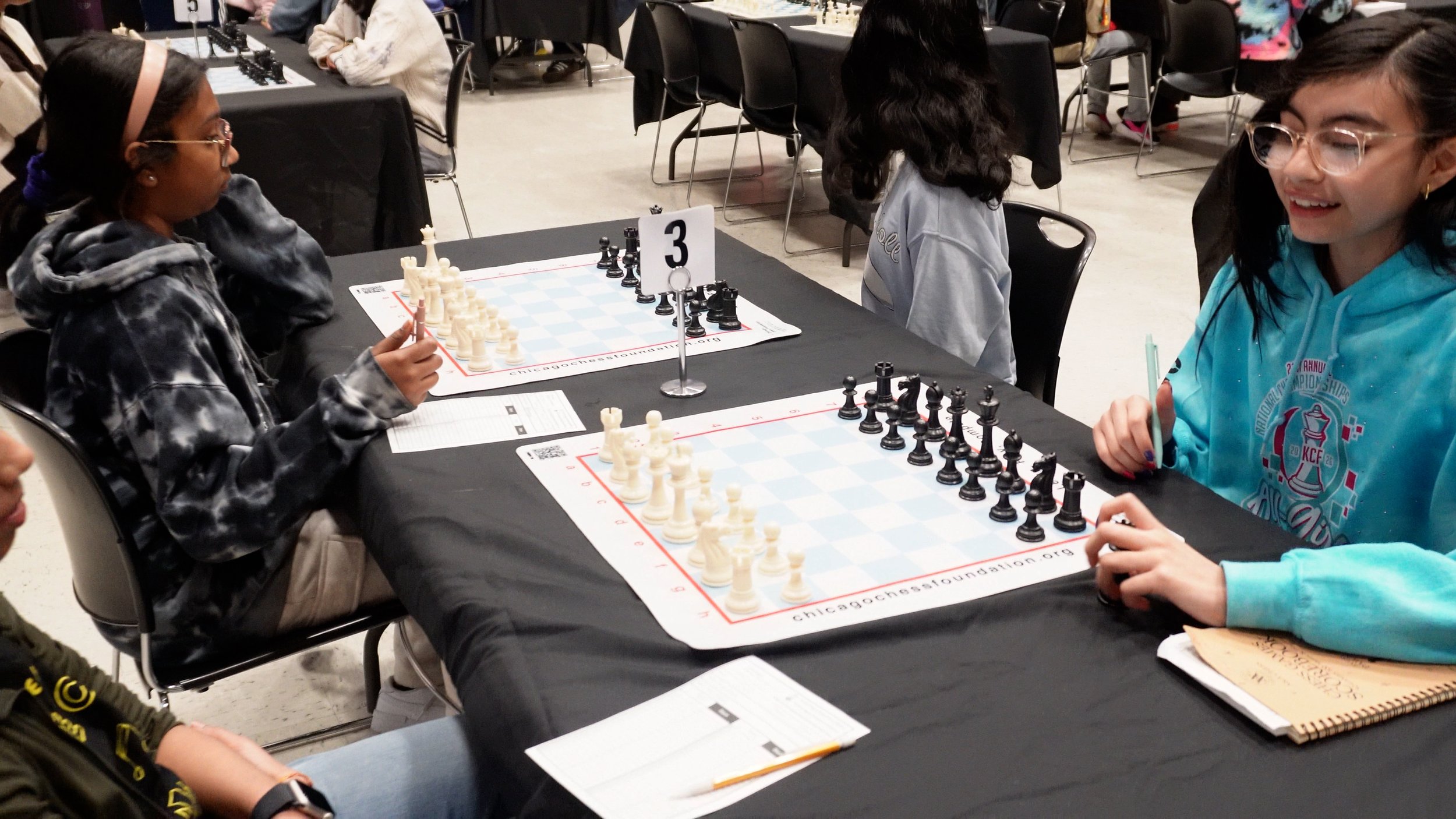
We are also fortunate to have people helping us build this work who have seen what stronger support for girls and women in chess can look like.
CCF board member Mariam Danelia is a Woman International Master from Georgia, a country with a deep chess tradition and a long history of producing elite women players. Growing up, she experienced chess initiatives that created real opportunities for girls to learn, compete, and see a future for themselves in the game.
Now she is excited to help bring some of that same energy to Chicago.
That matters to me because we should not have to invent every solution from scratch. We can learn from people who have experienced chess cultures where girls and women were given stronger pathways to participate, compete, and lead, and then build something that makes sense for Chicago.
Our goal is not simply to host more events for girls.
It is to create a stronger pipeline for girls in Chicago chess from their first lesson, to their first tournament, to competing at a high level, and eventually to becoming the coaches, organizers, mentors, and leaders who shape what chess looks like here.
Inclusion has to affect what we build
I don't want inclusion to become a sentence we put on the website.
It should change our programming.
It should change where we host events.
It should change who we hire as coaches.
It should change the partnerships we pursue.
It should change whose accomplishments we celebrate.
And sometimes it should force us to admit that a program can technically be "open to everyone" while still not being accessible to everyone.
A free tournament across town isn't equally accessible to a family without reliable transportation.
A chess club full of boys may technically welcome girls while still feeling like a place that wasn't built with them in mind.
A chess event isn't truly accessible to visually impaired players simply because nobody explicitly told them they couldn't attend.
The work is in removing those barriers before someone has to ask us to.
The next version of CCF
Chicago Chess Foundation started with a simple idea: a family's ability to pay should not determine whether their child gets to experience chess.
We still believe that.
We're just expanding the definition.
Economic access matters.
Geographic access matters.
Representation matters.
Disability access matters.
Belonging matters.
And the more we listen to our students, families, coaches, and partners, the more clearly we understand that these things are connected.
We don't want to build one chess community and invite everyone into it.
We want to help build a Chicago chess community that belongs to everyone from the beginning.
Every neighborhood.
Every school.
Girls and boys.
Women and men.
Players with disabilities.
Beginners learning how the pieces move and advanced players competing for championships.
If chess really is a game for everyone, our job is to make sure the chess community looks like it.